
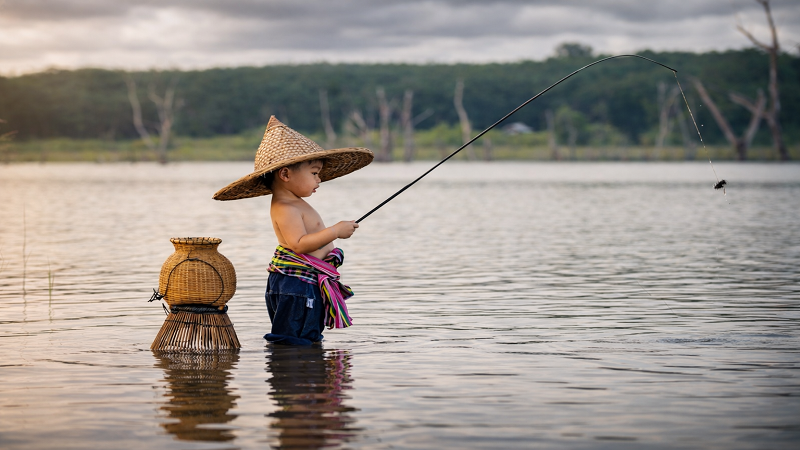
Asian fishing is more than just catching fish — it’s a cultural legacy, a way of life, and one of the most significant contributors to the global seafood industry. Across East, Southeast, and South Asia, fishing combines ancient tradition with modern innovation, supporting livelihoods, shaping cuisine, and influencing environmental policy worldwide.
In this article, we explore the heritage, diversity, modern challenges, and future of fishing practices throughout Asia.
Historical Roots of Asian Fishing
Fishing in Asia stretches back thousands of years. From the stilt fishermen of Sri Lanka to the sampan netters of China’s Pearl River Delta, Asian communities developed unique methods adapted to their coastal and riverine environments.
In many Asian cultures fishing is deeply spiritual. Rituals, beliefs, and community festivals are connected to the sea and water. In Japan, for example, fishermen historically honored sea gods like Ebisu, seeking blessings for bountiful captures.
Unlike modern industrial fishing, early Asian fishing techniques prioritized balance with nature. Coastal villages lived seasonally, understanding tidal behaviors, fish migration, and sustainable harvests long before scientific fisheries management existed.
Traditional Techniques Across Asia
Across the continent, the diversity of environments produced equally diverse fishing styles:
1. River and Inland Fishing
In countries like Bangladesh, India, and Vietnam, rivers support millions of fishers. Traditional methods include:
-
Cast nets thrown by hand from riverbanks
-
Fish traps made from bamboo
-
Manual gill nets set in shallow waters
These techniques are simple yet effective — adapted over generations to local ecosystems.
2. Coastal and Deep-Sea Methods
Along East and Southeast Asia’s long coastlines, fishing evolved to meet the challenges of open water:
-
Drift nets and longlines deployed from boats
-
Spearfishing using poles or rudimentary gear
-
Cage systems near coral reefs
In Japan and Korea, coastal communities used small boats and harpoons to harvest squid and other migratory fish.
3. Aquaculture and Fish Farming
Asia leads the world in fish farming — especially in China, Thailand, and Indonesia. Traditional rice paddies were adapted for fish cultivation, creating early integrated aquaculture systems that provided food year-round.
Modern Asian Fishing: Industry and Innovation
Today, Asian fishing has transformed into both a massive industrial force and a hub of innovation:
Industrial Fleet Expansion
Countries like China maintain the largest fishing fleets globally, traveling far beyond national waters. These fleets harvest millions of tons of seafood annually — feeding domestic markets and exporting internationally.
While industrial expansion supports millions of jobs and satisfies global demand, it also raises important environmental questions (which we address later).
Technological Advances
Modern Asian fishers use:
-
Sonar and GPS mapping
-
Automated nets and trawlers
-
Refrigeration onboard vessels
-
Data systems for stock tracking
These tools increase efficiency and yield, but they also risk overfishing if unmanaged.
Asian Fishing’s Cultural Significance
Fishing isn’t just an economic activity — it’s cultural heritage.
Cuisine and Tradition
Many Asian cuisines are defined by seafood: from Japanese sushi and sashimi to Thai grilled fish, Vietnamese fish sauce, and Indian coastal curries. Fish and seafood shape community diets, celebrations, and religious practices.
Social Structures
Entire communities organize lives around fishing seasons. Elders pass down skills, and festivals celebrate catches. In many villages, fishing also supports traditional handicrafts like net making and boat carving.
Environmental Challenges and Sustainability
As the industry has modernized, Asian fishing faces serious sustainability issues:
1. Overfishing
Large fleets and high demand put pressure on fish stocks. Some species — like tuna and mackerel — are overexploited in parts of Asia.
2. Habitat Damage
Trawling and destructive gear can harm coral reefs, seagrass beds, and river ecosystems. Mangrove loss also reduces nursery habitats for juvenile fish.
3. Pollution
Plastic waste, chemical runoff, and industrial contamination threaten marine animals and human health alike.
Sustainable Efforts
Governments and NGOs in Asia are now promoting:
-
Marine protected areas
-
Community-managed fishing cooperatives
-
Aquaculture best practices
-
Selective gear that reduces bycatch
These efforts aim to balance economic needs with ecological stewardship.
The Future of Asian Fishing
Looking ahead, the future of Asian fishing will revolve around three priorities:
1. Innovation With Responsibility
Advanced technology — including AI for tracking fish stocks and eco-friendly fishing gear — can help ensure healthier oceans and sustainable yields.
2. Community Resilience
Supporting small-scale fishers with fair market access, training, and climate adaptation strategies empowers local economies and preserves cultural heritage.
3. Policy and Cooperation
International collaboration — including agreements on fishing limits and shared waters management — is crucial to protect global marine ecosystems.
Conclusion
Asian fishing represents one of the oldest and most vibrant maritime traditions on the planet. Its story — from handcrafted nets and river trapping to global fleets and aquaculture innovation — reflects thousands of years of ingenuity and adaptation.
As challenges like overfishing and climate change rise, Asia’s fishing communities, governments, and innovators are charting a path toward a more sustainable and resilient future — ensuring that fishers and seafood lovers alike can thrive for generations to come.